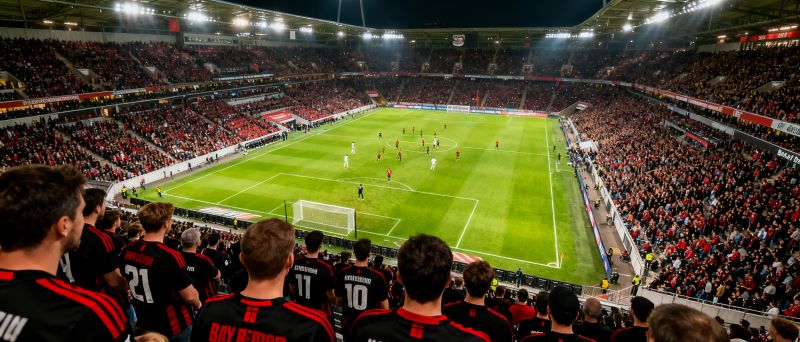
Bayern Munich 4-0 Hoffenheim wasn't a demolition derby;it was a surgical procedure. From the third minute, when Jamal Musiala ghosted between two centre-backs to poke home a low cross, the contest felt decided. Hoffenheim arrived with a back five and left with a lesson in spatial awareness. I counted at least four occasions in the first half alone where Bayern's midfield rotated so fluidly that Hoffenheim's wing-backs simply stopped tracking runners—they were pointing at each other。confused, as Leon Goretzka strolled into the box.What struck me most wasn't the scoreline but the economy of movement. Bayern didn't press frantically;
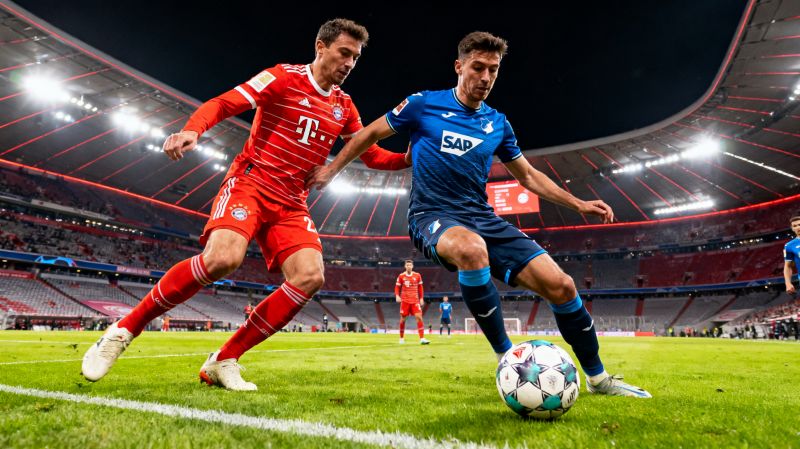
they pressed with geometry. Every Hoffenheim pass into wide areas triggered a trap—two players closing the receiver, one cutting the return lane. The second goal, a Harry Kane header from a Joshua Kimmich corner, came from a set-piece routine that looked rehearsed a hundred times: three blockers, one decoy run, Kane arriving late. Hoffenheim's goalkeeper, Oliver Baumann。actually saved the first attempt—a flicked header from Dayot Upamecano—but the rebound fell perfectly for Kane. Luck?No. Bayern had three players crashing the six-yard box;Hoffenheim had one.There's a tendency to romanticise underdog resistance, but Bayern Munich 4-0 Hoffenheim exposed a brutal truth: Hoffenheim's midfield couldn't handle transitions. When Bayern won the ball in their own half, they needed three passes to reach the final third. When Hoffenheim won it。they needed six—and by then, Bayern's shape was set. The third goal encapsulated this. Leroy Sané intercepted a loose touch near the halfway line, drove forward, and slipped a pass to Serge Gnabry, who had drifted into the inside-right channel. Gnabry's finish was almost casual—a side-footed shot into the far corner. Baumann didn't move. Neither did Hoffenheim's left centre-back, who was still jogging back.Late in the game, with the result beyond doubt, something odd happened: Bayern slowed down. Not out of mercy—out of boredom. They kept the ball for two-minute stretches, and the crowd began doing the wave. That's when I noticed Thomas Müller, on as a substitute, barking at his teammates to push higher. Even at 4-0, he wanted the fifth. That mentality is why Bayern Munich 4-0 Hoffenheim felt less like a contest and more like a training exercise with a scoreboard. Hoffenheim's coach, Pellegrino Matarazzo。
spent most of the second half with his hands in his pockets, staring at the pitch as if hoping the ground would swallow the ball. It didn't.The final whistle brought polite applause, not delirium. Bayern's players exchanged quick handshakes and walked off. No dramatic celebrations. Why would there be?This was routine—a professional dismantling of a side that offered resistance only in brief。
scattered moments. Hoffenheim's best chance came in the 67th minute, a header from Andrej Kramarić that Manuel Neuer tipped over. That was it. One shot on target. Bayern had fourteen. The gap in quality wasn't just about money or reputation;it was about decision-making speed. Every Bayern player seemed to know the next pass before receiving the ball. Hoffenheim's players were still thinking. That half-second difference, repeated across ninety minutes, produces a 4-0. Nothing mystical about it.